
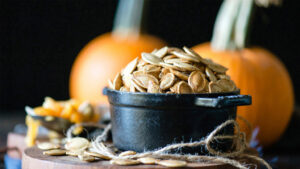
Pumpkin seeds, also known as pepitas, are small but nutrient-rich seeds that provide protein, dietary fiber, unsaturated fats and minerals including magnesium, zinc and iron. Their nutritional composition can vary depending on the pumpkin variety and how the seeds are prepared. [1]
But are pepitas good for you? And how many calories and nutrients do pumpkin seeds actually contain? Here’s what to know about pumpkin seed nutrition, plus some easy ways to enjoy them.
What are pumpkin seeds and pepitas?

Pumpkin seeds are the edible seeds found inside pumpkins. You may see them sold with their outer shell or without it.
The green, flat seeds commonly sold as pepitas are pumpkin seeds with the outer shell removed. Their nutritional composition can differ depending on whether the shell is included, so it’s useful to check the serving information for the specific product you’re eating.
Pumpkin seeds can also be eaten raw or roasted. Processing and preparation can affect their nutritional composition.
Pumpkin seed nutrition facts
Pumpkin seeds contain protein, dietary fiber, fats and a range of minerals. Research examining pumpkin seeds has identified magnesium, zinc, iron and potassium among their mineral components.
For example, USDA nutrition data lists the following for a 1-ounce (28.35 g) serving of roasted, unsalted pumpkin seeds:
| Nutrient | Pumpkin seeds with shell | Shelled pumpkin seeds |
| Calories | 130 | 160 |
| Total fat | 5.5 g | 14 g |
| Total carbohydrates | 15 g | 4 g |
| Net carbohydrates (total carbohydrates minus dietary fiber) | 10 g | 2 g |
| Dietary fiber | 5 g | 2 g |
| Protein | 5 g | 8 g |
| Iron | 0.9 mg | 2.3 mg |
| Calcium | 15.6 mg | 14.7 mg |
| Magnesium | 73 mg | 156 mg |
| Potassium | 261 mg | 223 mg |
| Zinc | 2.9 mg | 2.2 mg |
As you can see, shelled and unshelled pumpkin seeds have different nutritional profiles. Eating the same 1-ounce portion of each can provide different amounts of nutrients such as dietary fat, fiber and magnesium.
How many calories are in pumpkin seeds?

A 1-ounce (28.35 g) serving of roasted pumpkin seeds contains around 130 calories with the shell and 160 calories without the shell, based on USDA nutrition data. [2]
The exact calorie content can vary depending on the type of pumpkin seeds and how they are prepared. If you’re checking the calories in pumpkin seeds, look at the serving size as well as whether the seeds are shelled or unshelled.
How much protein is in pumpkin seeds?
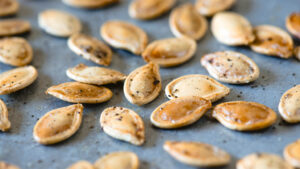
There is definitely protein in pumpkin seeds, with a 1-ounce serving providing around 5 grams with the shell and 8 grams without the shell according to the USDA’s research. [2]
Protein is an essential nutrient and forms a major structural and functional component of cells. Proteins also have roles as enzymes, transport carriers and hormones. [3]
Adding pumpkin seeds to foods such as yogurt, oatmeal or salads can be one way to include them as part of a varied diet.
What are the benefits of pumpkin seeds?
Pumpkin seeds provide a combination of macronutrients and micronutrients, including protein, dietary fiber, magnesium, zinc and iron.
Protein
Protein is an essential nutrient and a structural and functional component of cells. Pumpkin seeds can contribute to your daily protein intake, with shelled pumpkin seeds providing around 8 grams per 1-ounce serving based on USDA data.
Fiber
Pumpkin seeds also contain dietary fiber, although the amount varies depending on whether the shell is eaten.
Dietary fiber is an important part of a healthy diet, and research has found associations between higher fiber intake and several health outcomes. [4] You can learn more about dietary fiber and other fiber-rich foods in our guide to 5 Foods to Boost Your Dietary Fiber.
Magnesium
Pumpkin seeds are a source of magnesium. A 1-ounce serving of shelled pumpkin seeds provides around 156 mg according to the USDA.
Magnesium is an essential mineral, and pumpkin seeds are one dietary source of this nutrient.
Zinc and iron
Pumpkin seeds also provide minerals including zinc and iron. The amount depends on the type of pumpkin seed and serving size, so check the pumpkin seeds’ nutrition information for the specific product you choose.
Are pepitas healthy?
Pepitas can be included as part of a balanced diet and provide protein, fiber, unsaturated fats and several minerals.
However, no single food provides every nutrient the body needs. Eating a variety of foods is an important part of a balanced diet.
How many pumpkin seeds should you eat a day?
There isn’t one set amount of pumpkin seeds that everyone needs to eat each day. A 1-ounce (28.35 g) serving is a useful reference point when looking at their nutrition information, but individual dietary needs vary.
You can enjoy pumpkin seeds as part of meals and snacks based on your own preferences and overall diet. Try sprinkling them over yogurt, oatmeal or a salad for extra crunch.
Does roasting affect pumpkin seed nutrition?
The simple answer is yes, roasting affects the nutritional value of pumpkin seeds – in a good way (thanks to those phytonutrients). The extent of the change depends on factors such as temperature, cooking time and the type of seed. [5]
That doesn’t mean you need to choose one over the other. Raw and roasted pumpkin seeds can both be enjoyed in different ways, and roasting gives them a crunchy texture and toasted flavor that works particularly well in snacks and recipes.
If you’re comparing raw and roasted pumpkin seeds, check the nutrition information for the specific product rather than assuming the two are identical.
Easy ways to add pumpkin seeds to your diet
Pumpkin seeds are an easy way to add crunch to everyday meals and snacks. Here are some quick and delicious ways for how to eat pumpkin seeds.
- As a topping: Sprinkle pumpkin seeds over a serving of :ratio Cultured Dairy Snack for a crunchy contrast to the creamy texture.
- Over oatmeal: Add a spoonful of pumpkin seeds to oatmeal or overnight oats alongside fruit for extra texture.
- In trail mix: Combine roasted pumpkin seeds with your favorite nuts, dried fruit and other crunchy ingredients.
- In a smoothie: Blend banana, :ratio Vanilla High Protein Dairy Snack, a spoonful of pumpkin seeds and a sprinkle of pumpkin pie spice for a creamy, fall-inspired smoothie. You can also sprinkle more pumpkin seeds on top for a little extra crunch.
- On salads: Sprinkle shelled or unshelled pumpkin seeds over a fall salad in place of croutons.
- With roasted vegetables: Toss roasted pumpkin seeds with seasonal vegetables such as squash, cauliflower or Brussels sprouts.
- On granola: Add pumpkin seeds to your breakfast bowl with granola and yogurt for extra crunch.
Pumpkin seed nutrition: the bottom line
So, are pumpkin seeds good for you? Pumpkin seeds can be a nutritious addition to a balanced diet, providing protein, fiber, unsaturated fats and minerals including magnesium, zinc and iron.
Their nutritional value varies depending on factors such as whether they are shelled or unshelled and how they are prepared. Paying attention to serving size can help you understand their calorie and nutrient content.
Whether you call them pumpkin seeds or pepitas, there are plenty of ways to enjoy them. Sprinkle them over yogurt, blend them into a smoothie, add them to granola or use them to give your favorite fall recipes some extra crunch.
Want more ideas for building nutritious snacks and meals? Explore more from our community and blog posts. And when you’re ready for a crunchy topping, try pumpkin seeds with your favorite :ratio product!
Pumpkin Seed FAQs
Are pepitas good for you?
Yes. Pepitas can be part of a balanced diet and provide nutrients including protein, dietary fiber, magnesium, zinc and iron. Their exact nutritional value depends on the product and serving size.
Are pumpkin seeds high in protein?
Pumpkin seeds contain protein. A 1-ounce serving of roasted, unsalted shelled pumpkin seeds provides around 8 grams of protein according to the USDA.
How many calories in a pumpkin seed?
A 1-ounce serving of roasted pumpkin seeds contains around 130 calories with the shell and 160 calories without the shell, based on USDA nutritional data.
How much pumpkin seed should you eat a day?
There is no single daily amount that applies to everyone. A 1-ounce serving is a useful reference when looking at pumpkin seed nutrition, but individual dietary needs vary.
What is the nutritional value of pepitas?
Pepitas provide protein, fat, fiber and minerals including magnesium, zinc and iron. A 1-ounce serving of roasted, unsalted shelled pumpkin seeds contains around 8 grams of protein and 156 mg of magnesium based on USDA findings.
Sources
[1] Miki, Tetsuya et al. “Pumpkin Seed: An Emerging Functional Food with Nutritional and Therapeutic Potential.” Nutrients, 2026. https://pmc.ncbi.nlm.nih.gov/articles/PMC13156404/.
[2] U.S. Department of Agriculture. FoodData Central. U.S. Department of Agriculture, accessed September 2026. https://fdc.nal.usda.gov/.
[3] Institute of Medicine. Dietary Reference Intakes: The Essential Guide to Nutrient Requirements. Washington, DC: The National Academies Press, 2006. https://www.nationalacademies.org/read/11537.
[4] Reynolds, Andrew N. et al. “Dietary Fibre and Health Outcomes: An Umbrella Review of Systematic Reviews and Meta-Analyses.” PubMed, 2025. https://pubmed.ncbi.nlm.nih.gov/40651334/.
[5] De Bruin, Elizabeth A. et al. “Pumpkin Seeds: An Emerging Functional Food with Nutritional and Health Benefits.” Foods, 2021. https://pmc.ncbi.nlm.nih.gov/articles/PMC7988230/.